08-10-2014, 19:49
enters the Billboard chart this week at #11
Spotify online listen
4.0 of 5.0 from allmusic
I read that whole bio below and don't know what I read
it's like some alien world, this type of music and the world they live in
seriously, look at those track titles, wtf is that?
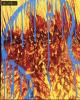
and the work that must have went into the album cover
the music, for those who call it that, is all electronic stuff with no vocals
and yet it comes on the chart at #11, so wtf do I know
you guys can have this world
Bio - from allmusic
![[Image: 267px-Aphex_Twin_2.jpg]](http://upload.wikimedia.org/wikipedia/commons/thumb/7/76/Aphex_Twin_2.jpg/267px-Aphex_Twin_2.jpg)
Exploring the experimental possibilities inherent in acid and ambience, the two major influences on home-listening techno during the late '80s,
Richard D. James' recordings as Aphex Twin brought him more critical praise than any other electronic artist. Though his first major single,
"Didgeridoo," was a piece of acid thrash designed to tire dancers during his DJ sets, ambient stylists and critics later took him under their
wing for Selected Ambient Works 85-92, a sublime touchstone in the field of ambient techno. James' reaction to the exposure portrayed an artist
unwilling to become either pigeonholed or categorizable. His second Aphex Twin album, Selected Ambient Works, Vol. 2, was so minimal as to be
barely conscious -- in what appeared to be an elaborate joke on the electronic community. Follow-ups showed James gradually returning to his
hardcore and acid roots, even while his stated desire to crash the British Top Ten (and perform on Top of the Pops) resulted in a series of
cartoonish pop songs whose twisted genius was masked by their many absurdities. His iconoclastic behavior surprisingly aligned with MTV
audiences turned on to end-of-the-millennium nihilist pop along the lines of Marilyn Manson and Nine Inch Nails.
James began taking apart electronics gear as a teenager growing up in Cornwall, England. (If the title Selected Ambient Works 85-92 is to be
believed, it contains recordings made at the age of 14.) Inspired by acid house in the late '80s, James began DJ'ing raves around Cornwall. His
first release was the Analogue Bubblebath EP, recorded with Tom Middleton and released on the Mighty Force label in September 1991. Middleton
left later that year to form Global Communication, after which James recorded a second volume in the Analogue Bubblebath series. This EP (the
first to include "Digeridoo") got some airplay on the London pirate radio station Kiss FM, and prompted Belgium's R&S Records to sign him early
the following year. A re-recording of "Digeridoo" made number 55 in the British charts just after its April 1992 release date, and James
followed with the Xylem Tube EP in June. He also co-formed (with Grant Wilson-Claridge) his own Rephlex label around that time, releasing a
series of singles as Caustic Window during 1992-1993. Available in cruelly limited editions, most of the recordings continued the cold acid
precision of "Digeridoo" -- though several expressed humor and fragility barely dreamed of in the hardcore/rave scene to that point.
The climate for "intelligent" techno had begun to warm in the early '90s, though. The Orb had proved the commercial viability of ambient house
with their chart-topping "Blue Room" single, and R&S scrambled to find useful material from its own artists. In November 1992, James acquiesced
with Selected Ambient Works 85-92, consisting mostly of home material recorded during the past few years. Simply stated, it was a masterpiece of
ambient techno, the genre's second work of brilliance after The Orb's Adventures Beyond the Ultraworld. As his star began to shine, several
bands approached him to remix their work, and he complied, with mostly unrecognizable reworkings of tracks by St. Etienne, the Cure, Jesus
Jones, Meat Beat Manifesto, and Curve.
Early in 1993, Richard James signed to Warp Records, the influential British label that virtually introduced the concept of futuristic
"electronic listening music" with a series of albums (subtitled Artificial Intelligence) by ambient techno pioneers Black Dog, Autechre, B12,
and FUSE (aka Richie Hawtin), among others. James' release in the series, titled Surfing on Sine Waves, was recorded as Polygon Window and
released in January 1993. The album charted a course between the raw muscle of James' nosebleed techno and the understated minimalism of
Selected Ambient Works. A deal between Warp and TVT gave Surfing on Sine Waves an American release (James' first) by the summer. A second album
was released that year, Analogue Bubblebath 3, for Rephlex. Recorded as AFX, the LP renounced any debt to ambient music and was the most bracing
work yet in the Aphex Twin canon. On a tour of America with Orbital and Moby later that year, James clung to the headbanging material, to the
detriment of his mostly irreplaceable gear. He later cut down on his live performance schedule.
In December of 1993, the new single "On" resulted in James' highest chart placing, a number 32 spot on the British charts. The two-part single
included remixes by old pal Tom Middleton (as Reload) and future Rephlex star µ-Ziq (Michael Paradinas). Despite James' appearance on the pop
charts, his following album, Selected Ambient Works, Vol. 2, appeared to be a joke on the ambient techno community. So minimal as to be barely
conscious, the quadruple album left most of the beats behind, with only tape loops of unsettling ambient noise remaining. The album mostly
struck out with critics but hit number 11 on the British charts and earned James a major-label American contract with Sire soon afterward.
During 1994, he worked on the ever-growing Rephlex stable, signing µ-Ziq, Kosmik Kommando (Mike Dred), and Kinesthesia/Cylob (Chris Jeffs) to
the label. In August 1994, he released the fourth Analogue Bubblebath, this one a five-track EP.
The year 1995 began with the January release of Classics, a compilation of his early R&S singles. Two months later, James released the single
"Ventolin," a harsh, appropriately wheezing ode to the asthma drug on which he relied. I Care Because You Do followed in April, pairing his
hardcore experimentalism with more symphonic ambient material, aligned with the work of many post-classical composers -- including Philip Glass,
who arranged an orchestral version of the album's "Icct Hedral" on the August 1995 single Donkey Rhubarb.
Later that year, the Hangable Auto Bulb EP replaced Analogue Bubblebath 3 as Aphex Twin's most brutal, uncompromising release -- a fusion of
experimental music and jungle being explored at the same time on releases by Plug and Squarepusher. In July 1996, Rephlex released the long-
awaited collaboration between Richard James and µ-Ziq. The album, Expert Knob Twiddlers (credited to Mike & Rich), watered down the
experimentalism of Aphex Twin with µ-Ziq's easy listening electro-funk. The fourth proper Aphex Twin album, November 1996's Richard D. James
Album, continued his forays into acid-jungle and experimental music. Retaining the experimental edge, but with a stated wish to make the British
pop charts, James' next two releases, 1997's Come to Daddy EP and 1999's Windowlicker EP, were acid storms of industrial drum'n'bass. The
accompanying videos, both directed by Chris Cunningham, featured the bodies of small children and female models (respectively) dancing around,
all with special-effects-created Aphex Twin faces grinning maniacally.
James released nothing during the year 2000, but did record the score to Flex, a Chris Cunningham short film exhibited as part of the Apocalypse
exhibition at London's Royal Academy. With very little advance warning, another LP, Drukqs, finally arrived in late 2001. Although James
continued making frequent DJ appearances, he released no more material until 2005, when Rephlex issued the first installment in a lengthy, 11-
part series of 12" singles titled Analord. The singles' minimalist acid techno harked back to his Caustic Window/Analogue Bubblebath material of
the early '90s. Chosen Lords, a CD compilation of some of the Analord material, appeared in April 2006. James continued to DJ and play live, and
in 2009 the Rushup Edge LP appeared under the performer name of the Tuss; although James and Rephlex denied that it was his work, rumors
persisted that it was yet another Aphex pseudonym. Additional rumors during the late 2000s promised releases from James, but they proved
unfounded. However, in 2014, an extremely rare acetate of a shelved 1994 Caustic Window album was auctioned for sale, bought via a crowdfunding
campaign, and distributed digitally to the contributors. The physical copy was then bought by the creator of the popular video game Minecraft
for over $46,000, with the money split between James, the contributors, and a charity. That August, a green blimp sporting the Aphex Twin logo
was spotted flying over London; by the end of the following month, Warp released Syro, the first Aphex Twin album in over a dozen years.
Album Review - from allmusic
![[Image: MI0003790399.jpg?partner=allrovi.com]](http://cps-static.rovicorp.com/3/JPG_400/MI0003/790/MI0003790399.jpg?partner=allrovi.com)
Thirteen years passed between Drukqs and Syro, the fifth and sixth Aphex Twin albums. The long stretch, however, wasn't short on new material
from Richard D. James. From 2005 through early 2014, the frequently dazzling Analord EPs (all but one of which was credited to AFX), an EP and
LP as the Tuss, and a liberated Caustic Window LP all reached the public. In August 2014, a nylon Aphex blimp -- not quite as immense as the
S.O.S. Band's presumably decommissioned aircraft, yet transfixing nonetheless -- was spotted over London, and the following month, Syro arrived
on Warp. Low on frenetics, Syro is anchored by rotund and agile basslines that zip and glide, and it's decked in accents and melodies that are
lively even at their most distressed. It also flows easily, a notion epitomized by the sequencing of "XMAS_EVET10 [Thanaton3 Mix]" and "Produk
29," where a mesmerizing combination of snaking low-end synthesizers (10:31, not 12:24 in length) is trailed by an avant-rap body mover that
bears some resemblance to Dabrye's lithe and sprightly early releases. Components of certain tracks, like the squiggled Mr. Fingers spin-cycle
bassline in "4 bit 9d api+e+6" and scrambled rhythms of "CIRCLONT6A [Syrobonkus Mix]," make the album seem like a bright progression from the
Analord releases. Apart from the straight-ahead slamming drums in "180db_," the most striking aspect of Syro is the funkiness of its
synthesizers relative to James' previous output. His playing here is far too fidgety to be grafted onto the likes of "You Dropped a Bomb on Me,"
"You're the One for Me," and "Just Be Good to Me," though some of the lines in, uh, the title cut, have that grimace-triggering quality. Only a
trace of the indiscriminate sequencing and stylistic switch-ups heard on Drukqs remains. It's saved for the end, with a rather elegant, part-
drum'n'bass excursion as the penultimate number, followed by a placid piano-only piece in the vein of those heard on the 2001 album. These
tracks actually enhance, rather than hinder, one of James' most inviting and enjoyable releases.
it's all like this:
[video=youtube;RUAJ8KLGqis]https://www.youtube.com/watch?v=RUAJ8KLGqis[/video]
Track Listing
1. Minipops 67 [Source Field Mix]
2. XMAS_EVET10 [Thanaton3 Mix]
3. Produk 29
4. 4 bit 9d api+e+6
5. 180db_
6. CIRCLONT6A [Syrobonkus Mix]
7. Fz pseudotimestretch+e+3
8. CIRCLONT14 [Shrymoming Mix]
9. Syro u473t8+e [Piezoluminescence Mix]
10. PAPAT4 [Pineal Mix]
11. S950tx16wasr10 [Earth Portal Mix]
12. Aisatsana
Spotify online listen
4.0 of 5.0 from allmusic
I read that whole bio below and don't know what I read
it's like some alien world, this type of music and the world they live in
seriously, look at those track titles, wtf is that?
and the work that must have went into the album cover
the music, for those who call it that, is all electronic stuff with no vocals
and yet it comes on the chart at #11, so wtf do I know
you guys can have this world
Bio - from allmusic
Exploring the experimental possibilities inherent in acid and ambience, the two major influences on home-listening techno during the late '80s,
Richard D. James' recordings as Aphex Twin brought him more critical praise than any other electronic artist. Though his first major single,
"Didgeridoo," was a piece of acid thrash designed to tire dancers during his DJ sets, ambient stylists and critics later took him under their
wing for Selected Ambient Works 85-92, a sublime touchstone in the field of ambient techno. James' reaction to the exposure portrayed an artist
unwilling to become either pigeonholed or categorizable. His second Aphex Twin album, Selected Ambient Works, Vol. 2, was so minimal as to be
barely conscious -- in what appeared to be an elaborate joke on the electronic community. Follow-ups showed James gradually returning to his
hardcore and acid roots, even while his stated desire to crash the British Top Ten (and perform on Top of the Pops) resulted in a series of
cartoonish pop songs whose twisted genius was masked by their many absurdities. His iconoclastic behavior surprisingly aligned with MTV
audiences turned on to end-of-the-millennium nihilist pop along the lines of Marilyn Manson and Nine Inch Nails.
James began taking apart electronics gear as a teenager growing up in Cornwall, England. (If the title Selected Ambient Works 85-92 is to be
believed, it contains recordings made at the age of 14.) Inspired by acid house in the late '80s, James began DJ'ing raves around Cornwall. His
first release was the Analogue Bubblebath EP, recorded with Tom Middleton and released on the Mighty Force label in September 1991. Middleton
left later that year to form Global Communication, after which James recorded a second volume in the Analogue Bubblebath series. This EP (the
first to include "Digeridoo") got some airplay on the London pirate radio station Kiss FM, and prompted Belgium's R&S Records to sign him early
the following year. A re-recording of "Digeridoo" made number 55 in the British charts just after its April 1992 release date, and James
followed with the Xylem Tube EP in June. He also co-formed (with Grant Wilson-Claridge) his own Rephlex label around that time, releasing a
series of singles as Caustic Window during 1992-1993. Available in cruelly limited editions, most of the recordings continued the cold acid
precision of "Digeridoo" -- though several expressed humor and fragility barely dreamed of in the hardcore/rave scene to that point.
The climate for "intelligent" techno had begun to warm in the early '90s, though. The Orb had proved the commercial viability of ambient house
with their chart-topping "Blue Room" single, and R&S scrambled to find useful material from its own artists. In November 1992, James acquiesced
with Selected Ambient Works 85-92, consisting mostly of home material recorded during the past few years. Simply stated, it was a masterpiece of
ambient techno, the genre's second work of brilliance after The Orb's Adventures Beyond the Ultraworld. As his star began to shine, several
bands approached him to remix their work, and he complied, with mostly unrecognizable reworkings of tracks by St. Etienne, the Cure, Jesus
Jones, Meat Beat Manifesto, and Curve.
Early in 1993, Richard James signed to Warp Records, the influential British label that virtually introduced the concept of futuristic
"electronic listening music" with a series of albums (subtitled Artificial Intelligence) by ambient techno pioneers Black Dog, Autechre, B12,
and FUSE (aka Richie Hawtin), among others. James' release in the series, titled Surfing on Sine Waves, was recorded as Polygon Window and
released in January 1993. The album charted a course between the raw muscle of James' nosebleed techno and the understated minimalism of
Selected Ambient Works. A deal between Warp and TVT gave Surfing on Sine Waves an American release (James' first) by the summer. A second album
was released that year, Analogue Bubblebath 3, for Rephlex. Recorded as AFX, the LP renounced any debt to ambient music and was the most bracing
work yet in the Aphex Twin canon. On a tour of America with Orbital and Moby later that year, James clung to the headbanging material, to the
detriment of his mostly irreplaceable gear. He later cut down on his live performance schedule.
In December of 1993, the new single "On" resulted in James' highest chart placing, a number 32 spot on the British charts. The two-part single
included remixes by old pal Tom Middleton (as Reload) and future Rephlex star µ-Ziq (Michael Paradinas). Despite James' appearance on the pop
charts, his following album, Selected Ambient Works, Vol. 2, appeared to be a joke on the ambient techno community. So minimal as to be barely
conscious, the quadruple album left most of the beats behind, with only tape loops of unsettling ambient noise remaining. The album mostly
struck out with critics but hit number 11 on the British charts and earned James a major-label American contract with Sire soon afterward.
During 1994, he worked on the ever-growing Rephlex stable, signing µ-Ziq, Kosmik Kommando (Mike Dred), and Kinesthesia/Cylob (Chris Jeffs) to
the label. In August 1994, he released the fourth Analogue Bubblebath, this one a five-track EP.
The year 1995 began with the January release of Classics, a compilation of his early R&S singles. Two months later, James released the single
"Ventolin," a harsh, appropriately wheezing ode to the asthma drug on which he relied. I Care Because You Do followed in April, pairing his
hardcore experimentalism with more symphonic ambient material, aligned with the work of many post-classical composers -- including Philip Glass,
who arranged an orchestral version of the album's "Icct Hedral" on the August 1995 single Donkey Rhubarb.
Later that year, the Hangable Auto Bulb EP replaced Analogue Bubblebath 3 as Aphex Twin's most brutal, uncompromising release -- a fusion of
experimental music and jungle being explored at the same time on releases by Plug and Squarepusher. In July 1996, Rephlex released the long-
awaited collaboration between Richard James and µ-Ziq. The album, Expert Knob Twiddlers (credited to Mike & Rich), watered down the
experimentalism of Aphex Twin with µ-Ziq's easy listening electro-funk. The fourth proper Aphex Twin album, November 1996's Richard D. James
Album, continued his forays into acid-jungle and experimental music. Retaining the experimental edge, but with a stated wish to make the British
pop charts, James' next two releases, 1997's Come to Daddy EP and 1999's Windowlicker EP, were acid storms of industrial drum'n'bass. The
accompanying videos, both directed by Chris Cunningham, featured the bodies of small children and female models (respectively) dancing around,
all with special-effects-created Aphex Twin faces grinning maniacally.
James released nothing during the year 2000, but did record the score to Flex, a Chris Cunningham short film exhibited as part of the Apocalypse
exhibition at London's Royal Academy. With very little advance warning, another LP, Drukqs, finally arrived in late 2001. Although James
continued making frequent DJ appearances, he released no more material until 2005, when Rephlex issued the first installment in a lengthy, 11-
part series of 12" singles titled Analord. The singles' minimalist acid techno harked back to his Caustic Window/Analogue Bubblebath material of
the early '90s. Chosen Lords, a CD compilation of some of the Analord material, appeared in April 2006. James continued to DJ and play live, and
in 2009 the Rushup Edge LP appeared under the performer name of the Tuss; although James and Rephlex denied that it was his work, rumors
persisted that it was yet another Aphex pseudonym. Additional rumors during the late 2000s promised releases from James, but they proved
unfounded. However, in 2014, an extremely rare acetate of a shelved 1994 Caustic Window album was auctioned for sale, bought via a crowdfunding
campaign, and distributed digitally to the contributors. The physical copy was then bought by the creator of the popular video game Minecraft
for over $46,000, with the money split between James, the contributors, and a charity. That August, a green blimp sporting the Aphex Twin logo
was spotted flying over London; by the end of the following month, Warp released Syro, the first Aphex Twin album in over a dozen years.
Album Review - from allmusic
Thirteen years passed between Drukqs and Syro, the fifth and sixth Aphex Twin albums. The long stretch, however, wasn't short on new material
from Richard D. James. From 2005 through early 2014, the frequently dazzling Analord EPs (all but one of which was credited to AFX), an EP and
LP as the Tuss, and a liberated Caustic Window LP all reached the public. In August 2014, a nylon Aphex blimp -- not quite as immense as the
S.O.S. Band's presumably decommissioned aircraft, yet transfixing nonetheless -- was spotted over London, and the following month, Syro arrived
on Warp. Low on frenetics, Syro is anchored by rotund and agile basslines that zip and glide, and it's decked in accents and melodies that are
lively even at their most distressed. It also flows easily, a notion epitomized by the sequencing of "XMAS_EVET10 [Thanaton3 Mix]" and "Produk
29," where a mesmerizing combination of snaking low-end synthesizers (10:31, not 12:24 in length) is trailed by an avant-rap body mover that
bears some resemblance to Dabrye's lithe and sprightly early releases. Components of certain tracks, like the squiggled Mr. Fingers spin-cycle
bassline in "4 bit 9d api+e+6" and scrambled rhythms of "CIRCLONT6A [Syrobonkus Mix]," make the album seem like a bright progression from the
Analord releases. Apart from the straight-ahead slamming drums in "180db_," the most striking aspect of Syro is the funkiness of its
synthesizers relative to James' previous output. His playing here is far too fidgety to be grafted onto the likes of "You Dropped a Bomb on Me,"
"You're the One for Me," and "Just Be Good to Me," though some of the lines in, uh, the title cut, have that grimace-triggering quality. Only a
trace of the indiscriminate sequencing and stylistic switch-ups heard on Drukqs remains. It's saved for the end, with a rather elegant, part-
drum'n'bass excursion as the penultimate number, followed by a placid piano-only piece in the vein of those heard on the 2001 album. These
tracks actually enhance, rather than hinder, one of James' most inviting and enjoyable releases.
it's all like this:
[video=youtube;RUAJ8KLGqis]https://www.youtube.com/watch?v=RUAJ8KLGqis[/video]
Track Listing
1. Minipops 67 [Source Field Mix]
2. XMAS_EVET10 [Thanaton3 Mix]
3. Produk 29
4. 4 bit 9d api+e+6
5. 180db_
6. CIRCLONT6A [Syrobonkus Mix]
7. Fz pseudotimestretch+e+3
8. CIRCLONT14 [Shrymoming Mix]
9. Syro u473t8+e [Piezoluminescence Mix]
10. PAPAT4 [Pineal Mix]
11. S950tx16wasr10 [Earth Portal Mix]
12. Aisatsana